Posted on Leave a comment

What Do Glock Switches Do?

Glock Safety Switch Backplate Guide

What Do Glock Switches Do?

You’ve seen the videos: a Glock pistol firing with the cyclic rate of a machine gun. That’s the work of a Glock switch, a small aftermarket component that fundamentally alters the firearm’s function. Specifically, it converts a standard semi-automatic Glock pistol into a fully automatic weapon by replacing the factory rear slide plate with a selector switch.

The Core Function: Converting Fire Control

A Glock switch, technically a “selector switch” or “auto sear,” replaces the rear cover plate on your Glock’s slide. Its primary function is mechanical, not electronic. When installed and the selector is flipped, it introduces a secondary sear or a disconnector bypass into the fire control system. This modification allows the pistol’s trigger to reset and be pulled again by the recoiling slide without the shooter releasing finger pressure. The result is that a single, sustained trigger pull initiates a cycle of firing, ejecting, and chambering a new round until the magazine is empty or the trigger is released. It changes the fundamental operation from one shot per trigger action to continuous automatic fire.

Key Components and Installation

A typical switch, like the common “Glock 18-style” aftermarket kits, consists of a few critical parts. The main housing replaces the rear slide plate and contains the selector lever. Inside, a spring-loaded sear arm or actuator is the heart of the device. Installation requires field-stripping the Glock to remove the slide, then swapping the factory plate for the switch unit. The internal arm must engage correctly with the firearm’s existing trigger mechanism and crucially, the slide’s rearward travel path. Proper fitment is essential for function and safety. While the installation is straightforward for anyone familiar with Glock disassembly, the component’s quality—like the hardened steel used in our kits at Glockswitchstore—directly impacts reliability and longevity under rapid fire stress.

Performance and Practical Effects

Once activated, the performance shift is dramatic. A standard Glock 17 has a cyclic rate around 1,200 rounds per minute (RPM) when converted. This means a standard 17-round magazine empties in under one second. Recoil becomes a sustained, upward-climbing push rather than discrete impulses, making controlled bursts extremely difficult. Muzzle rise is significant, and practical accuracy at any distance beyond a few yards plummets. The primary effect is a massive increase in rate of fire and ammunition consumption, not precision. This is why such devices were originally designed for military and specialized law enforcement units, like those issued the factory full-auto Glock 18, for extreme close-quarters suppressive fire.

Legal Status and Critical Considerations

It is a federal felony to manufacture, possess, or transfer a machine gun—which a Glock with an installed switch legally becomes—without the proper licensing from the ATF under the National Firearms Act (NFA). This includes registered pre-1986 transferable machine guns or a Special Occupational Taxpayer (SOT) license. The devices themselves, even uninstalled, are legally considered “machine gun conversion devices” (MGCDs) and are contraband. The legal consequence isn’t a fine; it’s a potential 10-year federal prison sentence per violation. This isn’t a gray area. While we at Glockswitchstore provide technical information for educational and compliance purposes, we strictly advocate understanding and adhering to all federal, state, and local laws.

What do Glock switches do?

A Glock switch is a conversion device that replaces the rear cover plate on a Glock pistol. When installed and activated, it modifies the internal fire control group to allow the weapon to fire continuously with a single pull of the trigger, converting it from a semi-automatic into a fully automatic firearm.

Why are Glock switches illegal?

Under the National Firearms Act of 1934 and subsequent laws, machine guns are heavily regulated. A Glock with an installed switch is legally classified as a machine gun. Possession of such a weapon, or the unregistered conversion device itself, without federal licensing is a felony punishable by up to 10 years in federal prison.

What is a Glock with a switch?

A Glock with a switch refers to a Glock pistol that has been modified with an aftermarket selector switch. This modified firearm is functionally identical to the factory-produced full-auto Glock 18, capable of automatic fire. In the eyes of the law, it is an unregistered machine gun, regardless of its origin.

Browse our glock switches collection

Last updated: April 07, 2026
Posted on Leave a comment

Glock Safety Switch Backplate Guide

Glock Safety Switch Backplate Guide

Glock Safety Switch Backplate Guide

If you’ve ever field-stripped a Glock, you’ve seen the small, rectangular plate on the back of the slide. That’s the backplate, and most shooters think its only job is to retain the firing pin assembly. But what if I told you that simple part is the key to the most significant functional upgrade you can make? The Glock safety switch backplate is the critical interface for installing a selector switch, transforming your pistol from semi-auto to a different level of performance.

What is a Glock Safety Switch Backplate?

Let’s be precise: the standard Glock backplate is not a safety switch. It’s a molded polymer cover. A true Glock safety switch backplate is a modified or replacement component designed to integrate with an auto-sear, commonly called a switch. This backplate has a precisely machined channel or pivot point that allows the installation of the switch’s selector lever. When you purchase a switch like the common “Glock 18C” style or a “Glock 17 Fun Switch,” it almost always includes this specialized backplate. The factory part won’t work. At Glockswitchstore, we only sell complete kits that include the correctly machined backplate, because getting this fit wrong means the switch won’t function or, worse, could cause a dangerous malfunction.

How the Switch & Backplate System Works

The mechanics are straightforward but require precision. The switch itself is a small, spring-loaded sear that sits in the rear cavity of the slide. The modified backplate holds the external selector lever, which connects directly to this internal sear. When the lever is rotated to the “safe” position, it physically blocks the sear from engaging. Rotating it to the “fire” position aligns the sear so that it can catch the striker under recoil, allowing for continuous fire as long as the trigger is held. The backplate is the anchor point for this entire external control mechanism. A poorly machined backplate will have sloppy lever movement, leading to inconsistent engagement and potential failure.

Installation & Compatibility Notes

Installing a switch backplate requires a full disassembly of your Glock slide. You’ll need a punch to drive out the rear slide cover plate pin. Once the factory backplate, striker, and springs are removed, the new switch components are installed in their place. Compatibility is model-specific. A kit for a Glock 19 Gen 3 will not fit a Glock 17 Gen 5 without modification due to differences in slide dimensions and recoil spring assemblies. Most switches on the market, including the ones we vet at Glockswitchstore, are designed for the common Gen 1-4 pattern in models like the G17, G19, G22, and G23. Always verify your pistol’s generation and model before purchasing.

Legal and Safety Imperatives

This isn’t a casual upgrade. Installing a switch backplate and auto-sear converts your pistol into a machine gun under the National Firearms Act (NFA). Unless you are a licensed SOT (Special Occupational Taxpayer) with the proper paperwork for a registered transferable sear or are building on a pre-1986 registered receiver, this is a federal felony punishable by up to 10 years in prison. We state this unequivocally. Glockswitchstore provides these components for educational purposes and to qualified entities operating under full compliance with all federal, state, and local laws. Ignorance of the law is not a defense. Know your local statutes—possession is illegal in many states regardless of federal status.

FAQs

Does Glock have a safety switch?

Standard commercial Glock pistols like the G17, G19, and G43 do not have a factory-installed selector switch. They have trigger safeties and drop safeties, but not a switch that enables automatic fire. The select-fire Glock 18 is a law enforcement/military variant and is not commercially available to civilians in the US.

Where are Glock switches legal?

Legality is strictly governed by the National Firearms Act (NFA). For civilians, they are only legal if permanently attached to a registered, transferable machine gun receiver registered before May 19, 1986, and the owner possesses the approved tax stamp. They are illegal for general civilian possession in numerous states, including California, New York, New Jersey, and Illinois, regardless of NFA status.

Does all guns have a safety switch?

No, the vast majority of firearms do not have a selector switch for automatic fire. Most modern semi-automatic pistols and rifles have manual safeties that block the trigger or firing mechanism, not a switch that changes the rate of fire. Select-fire capability is a defining feature of military-style machine guns and is heavily regulated.

Browse our glock switches collection

Last updated: April 07, 2026

Posted on Leave a comment

Glock Switch Legality: State by State

Glock Switch Legality: State by State

Glock Switch Legality: State by State

You just bought a Glock 19 Gen 5 and you’re looking at a Switch. Before you even think about installation, you need to know this: in the United States, a Glock switch—a machine gun conversion device—is federally regulated under the National Firearms Act (NFA). That means it’s a Title II firearm, the same as a suppressor or short-barreled rifle. Possession without the proper tax stamp and registration is a felony, punishable by up to 10 years in prison and a $250,000 fine. Federal law is the baseline, but state law can be far more restrictive. This isn’t about opinions; it’s about the letter of the law as it stands today.

The Federal Baseline: NFA Rules Apply Everywhere

Under federal law, specifically 26 U.S.C. § 5845(b), a machine gun is defined as any weapon which shoots, is designed to shoot, or can be readily restored to shoot, automatically more than one shot without manual reloading, by a single function of the trigger. A Glock switch, like the common “Glock Auto Sear” or “Giggle Switch,” meets this definition precisely. To own one legally, you must submit a Form 4 to the ATF, pay a $200 tax, and pass an extensive background check. The device must be registered to you or your trust before you can take possession. This process takes months. Crucially, manufacturing one yourself by 3D printing or machining, even for personal use, requires filing a Form 1 and receiving approval before you start. Doing it afterward is illegal manufacture of a machine gun.

States with Full Prohibition: No NFA Items Allowed

Several states have laws that outright ban the possession of any machine gun, regardless of federal registration. If you live in one of these states, a tax stamp is meaningless. The most restrictive are California, New York, New Jersey, Illinois, and Washington D.C. For example, California’s Penal Code 32625 prohibits possession of any machine gun, with extremely narrow exceptions for certain licensed entities. In Illinois, the Firearm Owners Identification (FOID) Act and the state’s machine gun ban make possession illegal for civilians. Residents of these states cannot legally possess a Glock switch, period. Attempting to have one shipped to these addresses, even from a dealer like Glockswitchstore, is impossible for a compliant business.

States with Modified NFA Allowances

A larger group of states generally permits NFA items, including machine guns, provided they are federally registered. However, they often attach additional conditions. States like Michigan, Pennsylvania, and Virginia allow ownership but may have transport restrictions or require specific state-level permits. Some states, like Iowa and Minnesota, have removed their state-level bans in recent years, opening a path for legal ownership following the federal process. It is your responsibility as the owner to know your state’s specific statutes on transport, storage, and use. A legally registered switch in Texas does not grant you the right to bring it into New York, even temporarily.

The Grey Areas and Critical Considerations

Two significant legal pitfalls exist beyond simple possession. First is the “readily convertible” doctrine. The ATF has ruled that possessing certain parts, tools, and instructions with the intent to create a machine gun can constitute illegal possession even if the device isn’t assembled. Second is state-level “assault weapon” bans. Some states define a firearm equipped with a conversion device as a banned assault weapon, creating another layer of violation. Always consult with a firearms attorney licensed in your state before initiating a Form 4 transfer. Assuming it’s legal because you saw it online is a direct path to losing your rights and your freedom.

Where are Glock switches legal?

Glock switches are only legal in U.S. states that do not prohibit NFA items and only after the individual device has been registered with the ATF via a Form 4 transfer and a $200 tax stamp is paid. States like Texas, Florida, and Arizona permit ownership following this federal process. States like California and New York ban them entirely.

Where are Glock switches legal in the world?

Outside the U.S., civilian ownership of machine gun conversion devices is exceptionally rare. A handful of countries like the Czech Republic and Switzerland may allow highly restricted ownership under specific licenses, but it is not comparable to the U.S. NFA process. In the vast majority of nations, including Canada, the UK, and Australia, possession is completely illegal for civilians.

Browse our glock switches collection

Last updated: April 07, 2026

Posted on Leave a comment

Glock Switch vs Binary Trigger: The Real Difference

Glock Switch vs Binary Trigger: The Real Difference

Glock Switch vs Binary Trigger: The Real Difference

You’re looking at your Glock and thinking about faster fire. Two terms keep coming up: the Glock auto-sear (a “switch”) and a binary trigger. They are not the same thing. One is a small, illicit metal part; the other is a complex, legal drop-in assembly. Understanding the mechanical and legal chasm between them is critical before you spend a dime or risk a felony.

Mechanical Function: How They Actually Work

A Glock switch, properly called an auto-sear or selector, is a simple component—often just a piece of stamped steel or polymer. When installed in the rear cavity of the slide, it interrupts the disconnector function. This forces the trigger bar to reset against the firing pin safety, causing the pistol to “run away” in fully automatic fire until the magazine is empty. It’s a crude, uncontrolled conversion. A binary trigger, like the one from Franklin Armory for the Glock, is a complete trigger mechanism replacement. It uses a patented disconnector that fires one round on the pull and a second on the release of the trigger, effectively doubling your rate of fire while maintaining one shot per trigger action. The control and engineering are worlds apart.

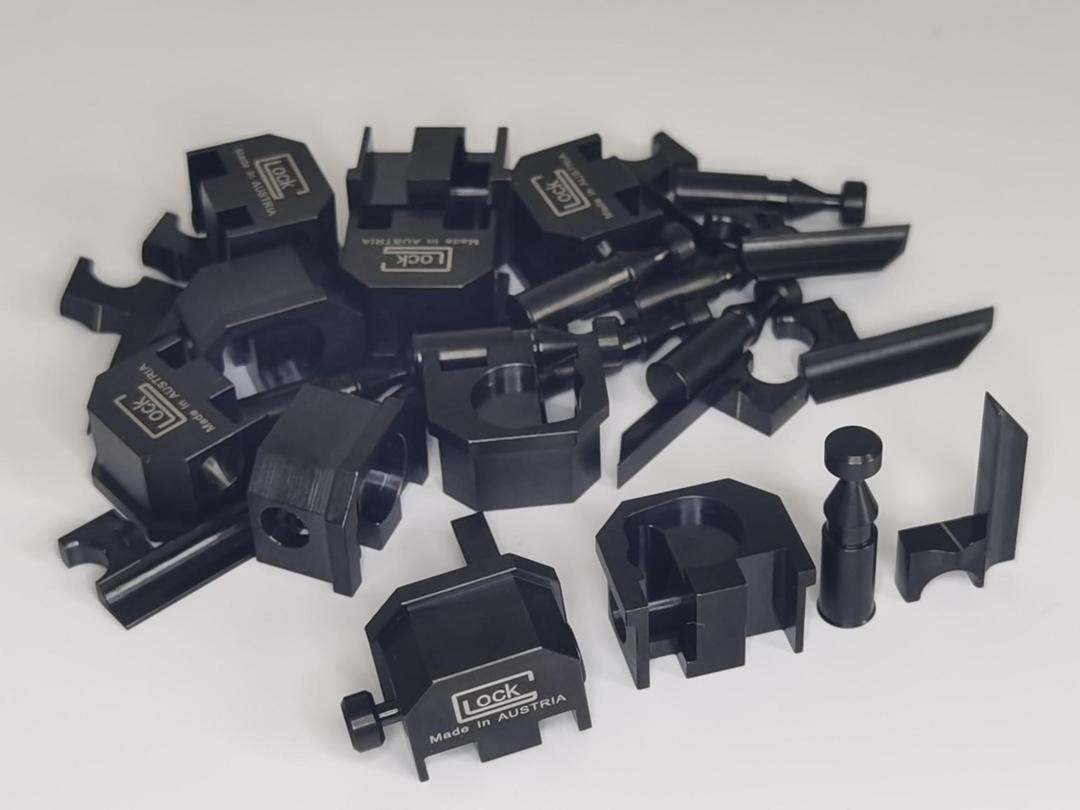
Precision-machined Glock auto sear switch

Rate of Fire & Practical Control

Let’s talk real-world performance. A Glock with a switch will dump a standard 17-round magazine in under two seconds. It’s a spray. Recoil control is nearly impossible after the first shot, making it wildly inaccurate and dangerous for the user. It’s a novelty act. A binary trigger offers a disciplined, high-speed cadence. A skilled shooter can achieve rates around 400-500 rounds per minute, but each shot is a deliberate action—pull and release. This allows for target re-acquisition and manageable recoil impulse between shots. For practical rapid fire on a budget range, the binary system provides a semblance of control the switch utterly destroys.

The Legal Reality: NFA Definitions

This is the non-negotiable part. Under the National Firearms Act (NFA), a machine gun is defined as any weapon which shoots more than one shot, without manual reloading, by a single function of the trigger. A Glock switch mechanically creates this exact function, making the host pistol an unregistered machine gun. Possession is a federal felony. A binary trigger is engineered to exploit a technicality: one “function” (a full cycle of pull and release) fires two shots. The ATF has evaluated specific models, like the Franklin Armory BFSIII, and issued determination letters classifying them as legal firearm components, not machine guns. The legal line is razor-thin but definitive.

Franklin Armory Binary Trigger installed in Glock frame

Cost, Installation & Reliability

Here’s where the market speaks. A cheap, illicit auto-sear from a sketchy website might cost $20-$50. Installation requires punching out two pins, dropping the part in, and hoping it works—often it doesn’t, or it causes catastrophic malfunctions. It’s junk. A quality binary trigger system like the Franklin Armory BFSIII for Glock runs about $350-$400. Installation is a detailed drop-in procedure requiring you to replace the entire trigger housing, cruciform, and disconnector. When properly installed, it’s as reliable as a factory trigger. For those seeking a legal performance upgrade, the investment in a binary system from a reputable retailer is the only sane path. Glockswitchstore sources components that meet stringent quality checks, which is essential for a mechanism this intricate.

Final Verdict: Which One Makes Sense?

If you’re a responsible gun owner, there is no debate. The Glock switch is a prohibited device that turns your reliable sidearm into an illegal, uncontrollable bullet hose. It has no legitimate sporting purpose and will land you in prison. The binary trigger is a sophisticated, legal accessory for enthusiasts who want to explore rapid-fire shooting disciplines within the bounds of the law. It requires skill to use effectively and offers a unique training challenge. For anyone serious about firearms, the choice is clear: steer far clear of auto-sears and explore the engineered, legal alternatives if you must. Always verify the current ATF rulings before purchasing any fire control component.

FAQ

Can you put a binary trigger on a Glock?

Yes, but only with a dedicated model designed for the Glock platform, such as the Franklin Armory BFSIII for Glock. It is a complete drop-in trigger pack that replaces the factory trigger mechanism. It is not compatible with all generations, so you must verify model compatibility before purchase.

Why are Glock switches illegal?

Glock switches are illegal because they are machine gun conversion devices as defined by the National Firearms Act. Their sole function is to convert a semi-automatic Glock pistol into a fully automatic machine gun. Mere possession of one, even without installing it, constitutes a federal felony with a mandatory minimum prison sentence.

Why does Glock have 2 triggers?

The Glock’s “two triggers” are actually a single trigger blade with an integrated safety lever in the center. This is the Safe Action system. The smaller inner lever must be fully depressed to deactivate the internal safeties and allow the main trigger to be pulled to the rear. It’s a passive safety feature, not a binary or selective-fire mechanism.

Browse our glock switches collection

Last updated: March 28, 2026

Posted on Leave a comment

How a Glock Switch Functions: A Mechanical Breakdown

How a Glock Switch Functions: A Mechanical Breakdown

How a Glock Switch Functions: A Mechanical Breakdown

The Glock selector switch, or auto-sear, doesn’t make your pistol fire faster by magic. It functions by physically altering the firearm’s trigger mechanism to interrupt the disconnector’s function. When installed, this small, precisely machined component holds the firing pin in a rearward, cocked position after each shot. This bypasses the standard semi-automatic cycle where the trigger must be released and reset. The result is a forced, fully-automatic action where a single, continuous pull of the trigger will fire rounds until the magazine is empty or pressure is released. Understanding this mechanical intervention is crucial for any professional looking to grasp the platform’s potential.

The Core Mechanism: Bypassing the Disconnector

At the heart of a standard Glock’s semi-automatic function is the disconnector. This small part ensures the trigger bar drops down after each shot, disengaging from the firing pin shelf, and must be reset by releasing the trigger. A Glock switch, like the common “Glock 18” style auto-sear, installs into the rear cavity of the slide. Its job is to catch the firing pin after it strikes a primer. Instead of the trigger bar resetting, the switch holds the pin back. When the slide returns to battery, the switch releases the firing pin to strike the next round. This creates a loop, eliminating the need for trigger reset. The disconnector is effectively rendered inactive, allowing for sustained fire with one trigger pull. The precision of this component’s machining is non-negotiable for reliable function.

Installation and Interface with the FCU

Installing a switch requires interfacing directly with the Fire Control Unit (FCU) housed within the pistol’s frame. The switch itself typically mounts to the rear rail section of the slide, above the FCU. As the slide cycles, a leg or arm on the switch interacts with the trigger bar and cruciform. Proper installation demands the switch be correctly timed; it must engage the firing pin at the exact moment in the cycle to catch and hold it. An out-of-spec or poorly installed unit will cause malfunctions like hammer follow or failure to fire. For a drop-in solution that requires minimal fitting, the Selector Switch Pro model from our inventory is engineered for precise engagement with Gen 3-5 FCUs. Always verify compatibility with your specific model.

Cycling Dynamics and Rate of Fire

The rate of fire with an installed switch is dictated by the cyclic rate of the slide. A standard Glock 17 or 19 slide, combined with a factory recoil spring, typically yields a rate between 1,200 and 1,400 rounds per minute. That’s roughly 20-23 rounds per second. This is a mechanical limit. The switch doesn’t “speed up” the gun; it simply removes the human limitation of having to pull the trigger for each shot. The cycle is slide velocity-dependent. Using a lighter recoil spring or a compensated slide can increase the cyclic rate, while a heavier spring or weaker ammunition can decrease it. It’s a pure physics equation. For those seeking to manage this high rate, pairing a switch with a 33-round OEM magazine or a 50-round drum is a standard practice to maximize sustained fire capability.

Legal Considerations and Manufacturer Intent

It is imperative to state that the manufacture, sale, and possession of a machinegun conversion device like a Glock switch is heavily regulated under the National Firearms Act (NFA) in the United States. These components are designed solely for use by properly licensed manufacturers (SOTs) building registered post-sample or transferable machineguns, or for export to foreign military/law enforcement entities under appropriate licensing. For qualified professionals operating under the relevant federal and state licenses, sourcing a reliable, well-machined part is critical. Glockswitchstore supplies components to SOTs and other authorized entities. The full catalog includes switches compatible with various generations, all manufactured to the exacting specifications required for reliable function in a professional context.

Maintenance and Reliability Factors

Running a Glock in a full-auto configuration dramatically increases wear on specific components. The most significant points of stress are the slide stop lever, the trigger spring, and the locking block. A steady diet of full-auto fire will also accelerate wear on the slide rails and barrel hood. Maintenance intervals must be shortened. Using high-pressure 9mm NATO-spec ammunition (124gr at ~1,200 fps) is recommended for reliable cycling. The switch itself, being a simple mechanical sear, requires little maintenance beyond ensuring it is free of carbon buildup and metal shavings. For sustained use, having spare OEM upper parts kits and lower parts kits on hand is not a suggestion—it’s a necessity. The reliability of your system hinges on the quality of the conversion device and the supporting hardware.

How do Glock switches function?

A Glock switch functions as an auto-sear. It mechanically interrupts the standard firing cycle by catching and holding the firing pin after each shot, then releasing it as the slide returns forward. This bypasses the disconnector, allowing continuous fire with a single trigger pull until ammunition is expended.

How does a Glock switch function?

It functions by being installed in the rear of the slide where it interacts with the trigger bar and firing pin. During cycling, it engages the pin to hold it cocked, releasing it upon slide closure. This creates an automatic action loop without requiring trigger reset between shots.

What does a switch on a Glock do?

A switch on a Glock converts the pistol from a semi-automatic firearm to a fully-automatic machinegun. It alters the internal mechanics to fire multiple rounds with one continuous trigger pull. This is achieved by overriding the standard disconnector function within the fire control group.

For qualified professionals and SOTs requiring reliable, precision-machined conversion components, the selection and quality of the switch are paramount. Browse our glock switches collection to view our inventory of engineered components designed for duty-grade performance and exacting mechanical specifications.

Last updated: March 27, 2026

Posted on Leave a comment

Glock Switch Org Reviews: A Pro’s Take

Glock Switch Org Reviews: A Pro's Take

Glock Switch Org Reviews: A Pro’s Take

If you’re searching for “glock switch org reviews,” you’ve likely encountered a maze of forums, sketchy Telegram channels, and conflicting information. As someone who’s tested dozens of auto sears, I can tell you that most of those “org” reviews are unreliable at best and dangerous at worst. They’re often written by people who’ve never handled the product they’re praising or trashing. The reality is, evaluating a Glock switch requires hands-on testing for fit, material integrity, and cyclic rate consistency—none of which you can get from an anonymous forum post.

What “Glock Switch Org” Reviews Typically Get Wrong

The biggest flaw in community-driven review hubs is the lack of standardized testing. One user calls a switch “perfect” because it arrived and fit loosely in their P80 frame, while another condemns the same model for failing to reset in a Gen 5 MOS. Neither review is helpful. A proper review needs to specify the host firearm (e.g., Glock 17 Gen 3, 19X), the ammunition used (115gr vs 124gr NATO), and the round count tested. Many “org” reviews are based on a single 30-round magazine, which tells you nothing about longevity. At Glockswitchstore, we test every batch on multiple platforms for a minimum of 500 rounds before making any assessment. That’s the difference between an opinion and a professional evaluation.

Key Factors a Real Review Should Cover

Forget the star ratings and vague comments. When I assess a switch, I look at four concrete metrics. First is dimensional accuracy. A quality switch, like the GS-19 Pro model we carry, should drop into a properly machined rear rail pocket with zero side-to-side play. Second is material hardness. 4140 or 17-4 PH stainless steel is non-negotiable; anything softer than Rockwell 40C will deform under sustained fire. Third is spring tension. The selector spring must provide positive, tactile clicks between positions. Finally, rate of fire. A well-machined switch should yield a consistent ~1,200 RPM with 115gr ammo. If a review doesn’t address these points, it’s not a review—it’s noise.

Why Third-Party Marketplaces Are a Minefield

Sites like Glock switch org often link to or discuss sellers on platforms like Wish, Alibaba, or obscure .to domains. This is where buyers get burned. I’ve seen switches from these sources made of cast zinc alloy that shattered on the first mag dump, or with out-of-spec selector arms that wouldn’t engage the disconnector. The financial risk is one thing, but the safety hazard is real. A failing switch can lead to runaway full-auto fire or a catastrophic out-of-battery detonation. The few dollars saved buying from an unreviewed “vendor” on a forum aren’t worth the risk to your firearm or your safety. We’ve had customers bring us these failed units, and the metallurgical analysis is always the same: improper materials and no quality control.

Finding Trustworthy Information & Products

Your best resource isn’t a review aggregator; it’s a specialist retailer with transparent sourcing and clear product specifications. Look for sites that list the exact steel grade, provide detailed installation guides, and offer direct support. For example, our product pages specify that the Selector V2 is CNC-machined from 17-4 PH stainless, heat-treated to H900 condition, and includes a tool-steel spring. That’s actionable data. Furthermore, trustworthy sellers will distinguish between switches designed for specific generations, as a Gen 1-4 switch won’t function correctly in a Gen 5 without modification. Glockswitchstore provides this level of detail because we assume our customers are technically proficient and demand reliable performance, not just a cheap thrill.

Are reviews on Glock switch forums reliable?

Generally, no. They are anecdotal, lack controlled testing, and are often posted by individuals with minimal technical expertise or even by sellers posing as customers. They rarely document critical variables like host firearm generation, round count, or ammunition type.

What is the most common failure point in a poorly made switch?

The selector arm or the pivot hole. On sub-par units, the arm is often too short or malformed, failing to consistently engage the slide’s disconnector. The pivot hole can also egg out rapidly if the material is too soft, causing the entire switch to wobble and fail to reset.

How can I verify a seller’s credibility before purchasing?

Ask for the material specification sheet or a metallurgy report. Reputable manufacturers and distributors will have this for their CNC-machined products. Avoid any seller who cannot or will not state the specific alloy and hardening process used. Also, look for clear product photography that shows tooling marks consistent with CNC machining, not the grainy, pitted surface of a casting.

Browse our glock switches collection

Last updated: March 28, 2026

Posted on Leave a comment

How Glock Switches Work: Cutting Through the Reddit Noise

How Glock Switches Work: Cutting Through the Reddit Noise

How Glock Switches Work: Cutting Through the Reddit Noise

If you’ve spent ten minutes on any gun-related subreddit, you’ve seen the term “Glock switch.” The discussions are a mess of speculation, misinformation, and outright dangerous advice. As a professional in this industry, I’m here to replace the forum myths with technical facts. A selector switch, like the ones we carry at Glockswitchstore, is a machined component that replaces the factory rear plate on a Glock pistol, enabling a safe/semi/full-auto fire control group. It doesn’t “convert” your pistol; it requires a compatible auto-sear and specific internal modifications to function—something most Reddit threads completely gloss over.

The Mechanical Reality: It’s Not a Magic Button

Forget the “plug-and-play” fantasy. A genuine Glock switch is part of a fire control system. The switch itself is a selector lever that physically blocks or allows the movement of the auto-sear. In the “safe” position, it locks the sear. In “semi,” it functions like a standard Glock. Flip it to “auto,” and it permits the auto-sear to engage, allowing the slide’s momentum to reset the trigger as long as pressure is maintained. This requires precise timing and specific parts: a Lightning Link, an Auto Key Card, or a properly machined OEM-style sear. The switches we offer, like the Gen 3-4 Full-Auto Selector Switch, are precision-tooled from steel to provide that reliable interface, not the pot-metal junk you see hyped online.

What Reddit Gets Dangerously Wrong

The most pervasive and hazardous myth is that you can install a switch on any Glock and have a machine gun. This is mechanically impossible without the corresponding registered auto-sear or a pre-1986 registered receiver. Attempting to assemble these parts without the proper tax stamp is a direct felony. Another common error is discussing 3D-printed switches as reliable. While printed housings exist, the stress-bearing components—the sear and selector itself—must be metal to withstand cyclic rates exceeding 1,200 rounds per minute. That’s why Glockswitchstore sources only CNC-machined components; they’re built for the forces involved, not for show.

Legality: The NFA is Not a Suggestion

This is the non-negotiable part. Under the National Firearms Act (NFA), a machine gun is defined as any weapon which shoots more than one cartridge per function of the trigger. A Glock switch alone is considered a “machinegun” by the ATF because it is designed and intended solely for use in converting a weapon into a machinegun. Possession of one, unless attached to a registered, transferable auto-sear (like a registered Lightning Link) or a registered Glock receiver, is a federal crime punishable by up to 10 years in prison. This isn’t a gray area, despite what anonymous users claim. We support responsible ownership in full compliance with all applicable laws.

For the Enthusiast and Professional Market

For SOT manufacturers, law enforcement agencies, and individuals with the proper licensing, these components are vital tools. The functionality allows for controlled suppressive fire and specific training scenarios. When sourcing, the difference is in the tolerances. A poorly machined switch can lead to runaway full-auto, failures to reset, or catastrophic sear wear. Our inventory, which you can explore in our full catalog, is vetted for these critical specifications. For a complete, compatible system, professionals often look at our Auto Sear Kit bundles, which ensure all interacting parts are designed to work in unison.

FAQ: Your Direct Questions Answered

How do Glock switches work Reddit?

Reddit discussions often oversimplify it. A Glock switch is a selector lever that interfaces with an auto-sear inside the pistol. It physically blocks or allows the sear to function, changing the fire control from semi-automatic to full-automatic when in the “auto” position, provided all other legal and mechanical requirements are met.

Why are Glock switches illegal?

Glock switches are classified as “machineguns” under the National Firearms Act (NFA) by the ATF. Possessing one without it being permanently attached to a registered, transferable machine gun receiver or registered auto-sear is a federal felony. They are considered conversion devices with no other purpose.

Understanding the engineering and the law is paramount. If your work or licensed activities require these specialized components, you need a supplier that understands both. Browse our glock switches collection for industry-standard parts built for professionals.

Last updated: March 27, 2026

Posted on Leave a comment

Glock Switch Temu Review: The Real Deal

Glock Switch Temu Review: The Real Deal

Glock Switch Temu Review: The Real Deal

You’ve seen the ads on Temu and similar marketplaces: “Glock Auto Switch” for $29.99. As someone who’s installed hundreds of these components, I can tell you that price is your first and biggest red flag. Let’s cut through the marketing and break down exactly what you’re getting—and more importantly, what you’re risking—when you source a switch from a mass-market e-commerce platform.

The Temu Proposition: Price vs. Reality

Temu, Wish, and similar sites operate on a volume-based, drop-shipping model. The “Glock switches” listed are almost universally cheap, cast zinc alloy or pot metal knock-offs of the original design. They are not machined from billet steel or aluminum. I’ve had these units in hand, and the difference is immediately apparent. The finish is rough, the selector markings are often shallow or mis-stamped, and the fit is inconsistent. The $20-$40 price tag is enticing, but it reflects the cost of a disposable novelty, not a precision firearm component. For a reliable, machined unit, expect to pay between $180 and $250 from a reputable specialist like Glockswitchstore. The Temu price isn’t a bargain; it’s an indicator of profound corner-cutting in materials and manufacturing.

Critical Safety and Function Failures

This isn’t about snobbery; it’s about mechanics. A functional switch must withstand the intense, repetitive impact of the slide’s rearward travel. The cheap cast metal used in Temu-sourced switches is brittle. Under stress, I’ve seen the selector lever snap clean off, the housing crack, or the internal sear fail to engage. This can lead to a runaway firearm or a complete failure to fire. Furthermore, the dimensional inaccuracies mean it may not fit your frame correctly, causing excessive play or binding. Installing one of these is gambling with your safety and your firearm’s integrity. A real switch from a trusted source is heat-treated and machined to exacting tolerances for a reason.

Legal Pitfalls You Might Not See Coming

Beyond performance, purchasing these items from an international marketplace creates a significant legal paper trail. The transaction is recorded, and the item is shipped through international mail, which is monitored by Customs and Border Protection (CBP). Getting a seizure notice from CBP for an uncontrolled “metal toy” is one thing, but it creates a documented link between you and the purchase of a regulated item. It’s a headache you don’t need. Reputable domestic retailers like Glockswitchstore understand the regulatory environment and ensure compliant transactions, providing peace of mind that an overseas faceless marketplace cannot.

What You Should Buy Instead

If you’re in the market for a switch, invest in a tool, not a trinket. Look for a US-made, CNC-machined unit from 4140 or 4150 steel. The weight, finish, and precise click of the selector are dead giveaways of quality. Brands that supply legitimate manufacturers produce switches that drop in with minimal fitting and lock up tight. They are an investment in predictable performance. For a vetted selection of these professional-grade components, skip the algorithmic marketplaces and go straight to a specialist. The Glockswitchstore catalog, for instance, curates only machined, reliable products, not cast mystery metal.

What is a switch for a Glock?

A Glock switch, technically a “sear” or auto-sear, is a small metal component that replaces the factory rear plate on a Glock pistol. When installed correctly, it modifies the firearm’s fire control group to enable fully automatic fire by controlling the release of the striker.

Are the switches on Temu real?

They are physical objects, but they are not real in the sense of being functional, reliable firearm components. They are typically cheap, cast metal replicas not built to withstand the forces of automatic fire and pose significant safety risks.

Can you get in trouble for buying a Glock switch on Temu?

Yes. Purchasing any item classified as a machine gun conversion device from any source without proper federal licensing is a felony. Buying from an international platform like Temu adds a layer of customs scrutiny and creates a permanent international purchase record.

What should I look for in a quality switch?

Look for CNC machining from billet steel (like 4140), precise selector markings, a tight fit with no play, and a reputable domestic source. Avoid anything cast, zinc alloy, or sold at a fraction of the cost of known quality units.

Browse our glock switches collection

Last updated: March 28, 2026

Posted on Leave a comment

How to Switch Your Glock 43X Magazine Release: A Step-by-Step Guide

How to Switch Your Glock 43X Magazine Release: A Step-by-Step Guide

How to Switch Your Glock 43X Magazine Release: A Step-by-Step Guide

The factory magazine release on a Glock 43X is a compromise, designed for the widest possible user base. If you’re left-handed or simply want a more positive, extended control surface, swapping it out is a 5-minute job that requires minimal tools. The key is using the correct aftermarket part designed for the slimline “43” series frame, as standard Glock releases will not fit.

Understanding the Glock 43X Magazine Catch System

Unlike a Gen5 Glock 17 or 19, the Glock 43X uses a unique, non-reversible magazine catch assembly due to its single-stack-slim frame design. The factory part is polymer and sits in a dedicated channel on the left side. The release is actuated by a spring-loaded metal catch that engages the magazine notch. When you install an aftermarket release, you’re typically replacing the entire polymer paddle and the metal catch as one unit. It’s a simple lever and spring system, but precision in the catch geometry is critical for reliable lockup. A poorly machined part can cause failures to lock back on an empty mag or, worse, unintentional magazine drops.

Tools You’ll Need for the Job

You can complete this swap with just a 3/32″ punch and a small flathead screwdriver. A nylon or brass punch is ideal to avoid marring the frame, but a standard steel punch will work if you’re careful. The screwdriver is for gently prying the magazine catch spring from its groove. Some install kits, like the Vickers Tactical offerings for the G43, include a dedicated tool, but it’s not necessary. Have a clean, well-lit workspace—that small spring is the only part that can go flying. I keep a magnetic parts tray handy for these small jobs. Before you start, ensure the firearm is completely unloaded and the magazine well is empty.

Step-by-Step Removal of the Factory Release

First, lock the slide to the rear. This provides access and relieves tension on the magazine catch. Using your punch, depress the magazine catch plunger on the right side of the frame, just above the trigger guard. You’ll feel it click in. While holding the plunger depressed, push the magazine release button *in* from the left side. The entire assembly will now slide out to the right. Be prepared to catch the small, coiled magazine catch spring that sits behind it. This spring provides the tension. Inspect the spring for any deformation; it’s almost always reusable. This is also a good time to clean the channel in the frame of any lint or debris.

Installing Your New Aftermarket Magazine Release

Take your new release, such as the popular Hyve Technologies Monarch or Tyrant Designs CNC releases. First, insert the magazine catch spring into the hole on the right side of the new release’s metal catch bar. It should sit snugly in the groove. Then, from the right side of the frame, slide the new assembly into the channel. The metal catch bar goes through the frame, and the polymer paddle will sit on the left side exterior. You will need to again depress the magazine catch plunger on the right side to allow the catch bar to seat fully into its track. Once it’s fully seated and the plunger snaps back into its detent, the job is done. Function check by inserting an empty magazine and ensuring it locks in place and releases crisply.

Choosing the Right Aftermarket Release for Your 43X

Not all releases are created equal. For the 43X, you need a model specifically listed for the Glock 43/43X/48 platform. I recommend anodized aluminum releases for durability over polymer. The extended magazine releases from brands like Ghost Inc. or Kagwerks provide significantly more leverage without being overly bulky for concealed carry. For a more subdued upgrade, the OEM “Glock Large” release for slimline models is a good option, though it’s still polymer. Avoid ultra-aggressive textures if you carry IWB, as they can rub against your skin. Every release we carry at Glockswitchstore is vetted for proper fit and function in the 43X frame.

How to switch Glock 43X mag release?

Unload the firearm and lock the slide back. Depress the mag catch plunger on the right side with a 3/32″ punch. While holding it, push the release button in from the left to remove the assembly. Install the new release by sliding it in from the right side, again depressing the plunger to allow it to seat. Ensure the spring is correctly positioned.

How to swap Glock 43X mag release?

Swapping the release is a direct parts replacement. After removing the factory unit as described, simply reverse the process with your new aftermarket magazine catch. The critical step is correctly installing the small coil spring on the metal catch bar before inserting it into the frame from the right-hand side.

Ready to upgrade your control setup? Browse our curated collection of Glock 43X magazine releases and other performance parts at Glockswitchstore. We stock only proven components from top manufacturers to ensure your upgrade is simple and reliable.

Last updated: March 27, 2026